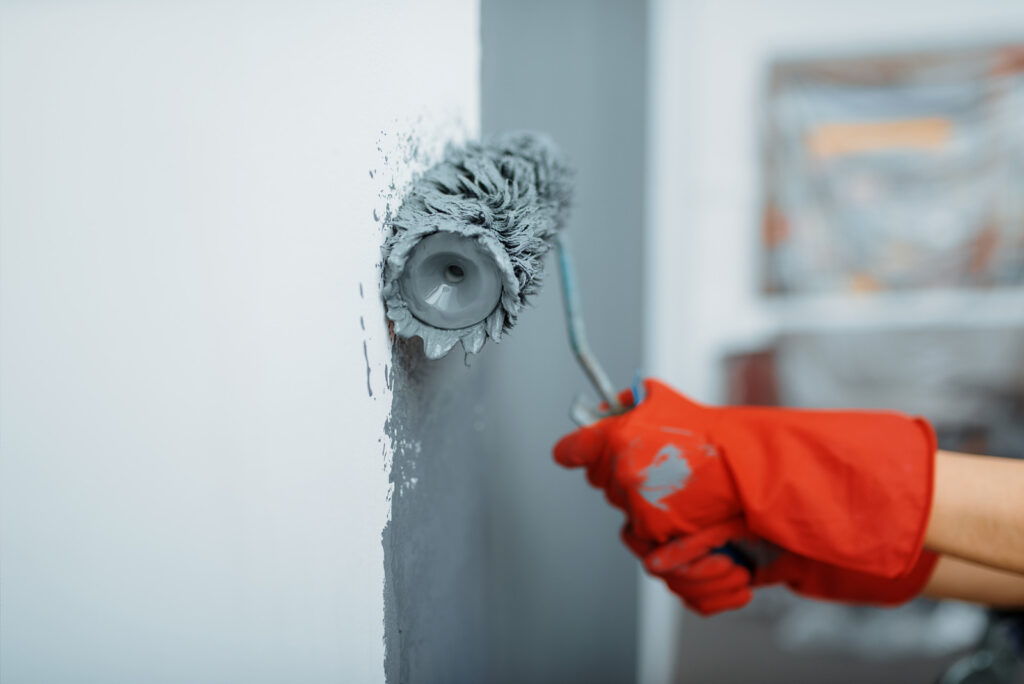
The homes of Nelson Tasman face a unique elemental trial. Here, where the Tasman Sea delivers salt-laden gales and the high-altitude sun burns with uncommon intensity, conventional acrylic paints—essentially liquid plastic—are asked to perform a duty they were never designed for. They blister, peel, and surrender within five to seven years, releasing microplastics into our watersheds. There exists, however, a finish forged from the same mineral intelligence that shapes our cliffs and headlands: silicate paint.
The Chemistry of Stone Made Liquid
Silicate exterior paint—often called mineral or potassium silicate paint—is not a coating but a catalyst. Composed of liquid potassium silicate (water glass), mineral pigments, and pure water, it contains zero acrylic binders, zero petrochemical solvents, and zero VOCs. When applied to mineral substrates, it doesn’t sit atop the surface; it initiates a process of petrification.
Through silicification, the potassium silicate penetrates porous surfaces and chemically reacts with alkaline substrates to form insoluble calcium silicate hydrate—essentially, stone micro-crystals that become physically part of your cladding. This crystalline matrix is microporous, allowing water vapour to escape while blocking liquid moisture, a critical attribute for Nelson Tasman’s 1,200+ mm annual rainfall and driven sea spray.
Environmental Credentials That Honour Our Watershed
Standard premium exterior acrylic paint contains VOCs and leaches microplastics as it degrades—substances that find their way into the Maitai River, Tasman Bay, and our coastal aquifers. Silicate paint, by contrast:
- 0 g/L VOCs at application and throughout its life
- No plastic content—the binder is mineral, not polymer
- CO₂ absorption during the carbonation curing process
- Zero toxic runoff—degradation products are natural minerals
- Lifecycle measured in decades, not years, eliminating the environmental cost of premature repainting

Engineered for Nelson Tasman’s Climate Extremes
Nelson Tasman presents a confluence of challenges that silicate paint was born to solve:
UV Resistance: The mineral pigments used in quality silicate paints are inert earth pigments with lightfastness ratings of 8/8. They don’t fade under the 8-9 UV index summers that bleach conventional paints to ghostly versions of themselves. The crystalline binder itself is UV-stable, unlike acrylics which polymer-degrade.
Breathability & Horizontal Rain: The living finish you appreciate in interior lime wash has an exterior parallel. Silicate paint’s microporous structure (vapour permeability SD-value ≈ 0.02 m) allows walls to breathe out moisture from internal sources while resisting wind-driven rain. For Tasman Bay coastal homes where storms assault walls at 90 degrees, this prevents the interstitial moisture accumulation that causes timber framing failure.
Salt Resistance: The mineral bond is unaffected by sodium chloride. While acrylic films become brittle and delaminate from salt crystallisation, silicate finishes on your Takaka or Motueka beachfront property simply petrify further.
Thermal Cycling: Nelson’s 20°C diurnal temperature swings cause substrate expansion/contraction that cracks conventional paint films. Silicate paint’s crystalline bond moves with the substrate, preventing the micro-fissures that admit moisture.
Application on New Zealand’s Exterior Substrates
Silicate paint’s versatility on typical Nelson Tasman cladding types is remarkable:
Fibre Cement (James Hardie, IBS): The perfect marriage. Silicate paint chemically bonds with the cementitious matrix of Hardie™ plank and IBS Flex, creating a finish that lasts the lifetime of the cladding. No primer needed on new fibre cement, though a prep coat homogenises absorption.
Brick & Stucco: Where silicate paint performs its magnum opus. On brick, it penetrates the fired clay, creating a breathable skin that prevents spalling from trapped moisture. On traditional lime stucco (common in Nelson’s heritage villas), it forms a monolithic mineral system.
Concrete Block: Commercial buildings benefit from silicate’s ability to cure concrete surfaces while providing protection against carbonation-mediated rebar corrosion.
Pure Eco Painting: The Art of Mineral Application
The application of silicate paint demands more than brushes—it requires geological patience and climatic intuition. Pure Eco Painting brings 20 years of finish craft to this mineral art. Their expertise extends beyond simple painting to understanding substrate petrology: whether your 1890s Nelson villa needs lime stucco consolidation before silicate application, or your Golden Bay bach’s weathered lime render requires a silicate consolidant that respects its porous, breathable nature.
They hold 10-year exterior guarantees on silicate systems—not because of paint warranty, but because their preparation and application ensures the mineral bond achieves full silicification. They work with the region’s weather patterns, scheduling applications during the low-humidity windows that allow proper cure, and they source pigments that harmonise with Nelson Tasman’s endemic colour palette: the greywacke greys, the kahikatea greens, the iron-sand ochres.
Bold question for your planning: Is your exterior project driven primarily by heritage conservation (requiring a historically correct mineral system) or by creating a weather barrier for a modernist architectural statement where the material performance is paramount?
Bold consideration: Given your focus on mineral purity, have you assessed whether your substrate requires a mineral consolidant before silicate application?
In Nelson Tasman, where our built environment is a dialogue with the natural, silicate exterior finishes are not merely a protective measure—they are a commitment to architecture that ages with dignity rather than disintegration.